Psychedelic drug development is accelerating, yet many of the core structures that support rigorous, interpretable clinical trials are still taking shape. As sponsors move into late-stage development and edge closer to potential approvals, the field is confronting foundational questions about therapy, blinding, trial fidelity, expectation bias, REMS planning, and next-generation compounds.
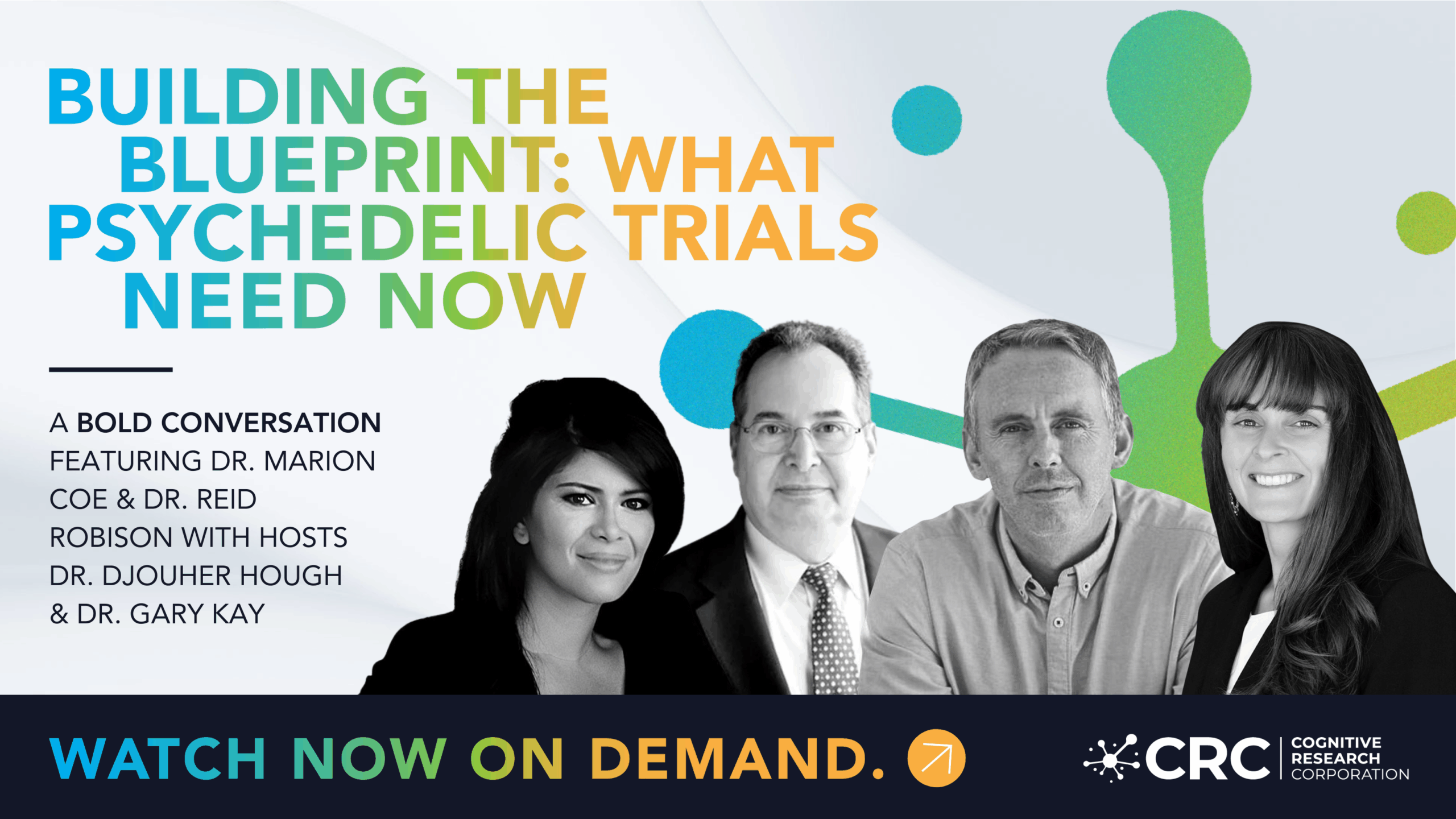
CRC’s recent Bold Conversations webinar, Building the Blueprint: What Psychedelic Trials Need Now, brought together leaders who are actively shaping how psychedelic clinical trials are designed, monitored, and evaluated. Hosted by Dr. Djouher Hough and Dr. Gary Kay, the panel featured:

Reid Robison, M.D., MBA

Marion Coe, Ph.D.
During the session, the panel explored the scientific, operational, and regulatory factors that are defining this next chapter. Below are several high-level insights that reflect the themes, questions, and practical considerations discussed during the conversation.
1. The Lykos MDMA Review Highlighted What the Field Must Strengthen
The conversation opened with an honest look at the Lykos MDMA advisory committee meeting and the FDA’s complete response letter. Both Dr. Robison and Dr. Coe described it as a meaningful turning point, not only for one program but for the entire psychedelic landscape.
According to the panel, three areas stood out:
- Adverse event collection, particularly for abuse-related experiences that can be misinterpreted as “positive” effects in psychedelic trials
- Durability of effect, given the chronic nature of conditions like PTSD and depression
- Minimizing confounds, including high rates of prior psychedelic use and population selection issues
Rather than discouragement, the panel emphasized that the complete response letter gives developers guidance on how to design stronger, more defensible programs moving forward.
2. Therapy and Support Need Clear Definitions and Consistent Delivery
A major theme throughout the webinar was the importance of defining what “therapy” or “supportive monitoring” actually means within a psychedelic protocol.
Panelists highlighted several realities:
- Sponsors are taking different approaches, ranging from intensive psychotherapy to supportive monitoring.
- Regardless of the model, therapy cannot remain a black box. It must be intentional, documented, and delivered consistently.
- Fidelity tools such as structured checklists, session logs, role-play training, and periodic oversight can help align site practices.
- The field is unlikely to settle on one universal “therapeutic modality” for all psychedelic studies, since needs differ by indication and mechanism.
Overall, the message was clear. For psychedelic trials to be reproducible and interpretable, every component surrounding the dose session must be operationalized with the same rigor.
3. Expectation Bias and Blinding Challenges Require Multilayered Strategies
Expectation bias came up repeatedly as one of the most significant methodological challenges in psychedelic research. The panel stressed that no single approach can address it on its own.
Effective approaches discussed included:
- Removing distinctive references to psychedelics across all recruitment materials
- Standardized communication scripts for staff across all sites
- Dose-ranging or low-dose control arms to strengthen blinding
- Thorough blinding assessments built into the protocol
- Centralized raters who remain independent of dosing sessions
Regulators have indicated that they don’t expect perfect blinding in psychedelic drug trials. However, they do expect developers to acknowledge bias risks, measure them carefully, and incorporate design features that support objective efficacy assessment.
4. Communication Shapes Participant Expectations Long Before Dosing
Both panelists emphasized that expectation does not begin in the dosing room. It begins the moment a potential participant sees a study advertisement or hears about the trial.
Important considerations included:
- Avoid language that creates hype or overpromises outcomes
- Standardize how coordinators, facilitators, investigators, and support staff talk about the study
- Normalize the full spectrum of possible experiences, including mild or challenging effects
- Ensure informed consent materials present balanced risk-benefit information
The panel reiterated that consistency across site staff is critical because expectation bias can arise unintentionally from everyday conversations, not just from formal communication.
5. REMS Planning Should Begin During Phase 3, Not After Submission
The panel also spent time discussing REMS requirements and the importance of preparing for them during Phase 3. Given the unique safety and monitoring needs associated with psychedelic compounds, REMS programs will likely include elements designed to ensure appropriate use after approval.
Considerations raised during the discussion included:
- Engaging the FDA about REMS planning well before NDA submission
- Establishing clear criteria for when participants are ready for discharge after dosing
- Identifying any training, certification, or site qualification needs that may be required
- Using Phase 3 to refine operational components that support safe administration
Early planning helps sponsors avoid operational and timing challenges later in development and supports a more seamless transition from late-stage trials to potential commercialization.
Watch the Full On-Demand Webinar
These takeaways highlight only a portion of the discussion. The full session includes deeper insights on regulatory expectations, fidelity monitoring, communication frameworks, and the evolving role of next-generation compounds.
Watch the full on-demand recording of Building the Blueprint: What Psychedelic Trials Need Now to learn more.
Your Psychedelics CRO Partner
CRC supports psychedelic developers with scientific and operational expertise across all phases of clinical development. If you would like to discuss your program or explore how CRC can support your next steps, our team would be glad to connect.